Everything you need to know about trail planning and design for long lasting trails.
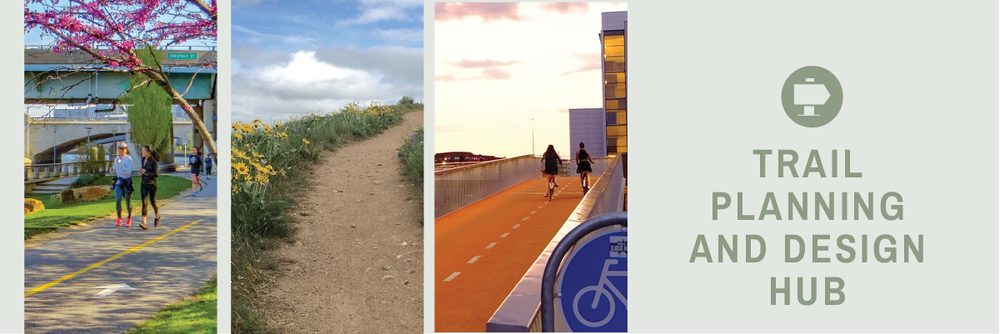
Effective trail planning is the foundation for creating safe, accessible, and sustainable pathways that benefit communities and the environment. Thoughtful design ensures that trails meet the needs of diverse users, connect key destinations, and integrate seamlessly with natural landscapes. From route selection and land use considerations to funding strategies and community engagement, successful trail planning requires a comprehensive approach. This hub provides essential resources, case studies, and best practices to guide planners, advocates, and stakeholders in developing trails that enhance recreation, transportation, and conservation efforts.
These webinars are from our American Trails Advancing Trails Webinar Series. Webinars recordings are free to American Trails members. Not a member? Join here. Browse the webinar archive by category, or use keywords in the search box. The list below is provided for easy access to popular webinars.
A Guide to Adaptive Mountain Bike Trailbuilding (7/28/25): This webinar will walk through the latest guidance for planning, designing, building, and retrofitting adaptive mountain bike trails, with a specific focus on nonmotorized, natural-surface trails. The speakers represent the critical stakeholders that should be involved in any aMTB trail project— trail manager, aMTB users, aMTB programs, and trail builder.
Bridges and Boardwalks: Planning, Design, and Construction (3/12/26): This session explores the full lifecycle of trail crossings— from planning and design through on-the-ground construction.
Community Driven: How Engagement Guides the Vision and Planning of a Community-Wide Trail Network: With an emphasis on community-wide trail networks, the best practices explored in this session will better equip professionals and community members toward creating vibrant, inclusive, and sustainable communities through trail development.
Connecting Recreational Benefits with Transmission Corridors: Researchers will share their findings, including case studies and best practices, and discuss how co-locating recreational amenities alongside transmission infrastructure can enhance community well-being, generate sustainable economic growth, and improve local wildlife habitat and ecosystems.
Designing Near Wetlands, Streams, Forests, and Other Environmental Resources: This presentation discusses the seven biggest considerations for planners and designers when designing near wetlands, streams, forests, and other environmental resources.
Effective Wayfinding Signage: Trail System Planning, Design, and Implementation: Hear from three different organizations how to prepare effective, user-friendly, and time-dynamic wayfinding signage guidelines.
Grand Canyon Greenway: From Vision to Reality: This webinar will feature three members of the original design team who will take attendees through the vision, design, and development process to develop the Grand Canyon Greenway.
How They Did It: Advocacy, Planning, and Creating Equestrian Trails Through Organization: In partnership with the Equine Land Conservation Resource, this webinar will explain how joining or creating an organization will help in addressing issues such as poor trail design, lack of maintenance, and general misunderstanding of horses that can result in loss of trail access. Please note: This webinar can apply to all trail activities, but examples in this webinar reference equestrian trails.
IMBA’s Trail Development Process: Building Community-Driven Trails (9/22/25): International Mountain Bicycling Association (IMBA) experts will guide you through an overview of the seven critical steps of the Trail Development Process, from initial access and community engagement to long-term stewardship.
Innovative Development of a Year-Round, Destination Trail System in a Rural Area: Learn about one organization’s innovative approach to building and maintaining a trail system that serves as a model for communities around the country.
Integrating Trails into Park Planning: Sponsored by South Carolina Parks, Recreation, and Tourism and hosted in partnership with the National Recreation and Park Association. Attendees can expect to come away from this webinar with a toolbox of best practices and resources that get into the nitty-gritty of how to understand trails as park elements, plan for their sustainable integration into existing and future parks, and build trails and trail networks as powerful tools for connecting your parks to the public.
Introduction to Trail Planning (Part 1 of 3): One part of a three-part series on the Introduction to Trail Planning, Design and Development, and Management. PART ONE: In the Introduction to Trail Planning we will discuss different types of trail plans including Master Plans Conceptual Plans, Development Plans, and Management Plans.
Introduction to Trail Design and Development (Part 2 of 3): One part of a three-part series on the Introduction to Trail Planning, Design and Development, and Management. PART TWO: In the Introduction to Trail Design and Development we will discuss sustainable trail design that is common for trails as well as unique elements associated with specific types of trail use.
Introduction to Trail Management (Part 3 of 3): One part of a three-part series on the Introduction to Trail Planning, Design and Development, and Management. PART THREE: In the Introduction to Trail Management we will discuss visitor and maintenance management.
Introduction to Trail Maintenance Management Planning:
If you already have a Trail Maintenance Management Plan this webinar will present some ideas on how you might improve it. If you are considering developing one, you will get information to consider so you can make good decisions about how you might best move forward with the development of your plan.
Technology in Trail Building and Planning: Drones and LiDAR: The use of emerging and evolving technologies such as drones, photogrammetry, RTK GPS, 3D modeling, and LiDAR technology to inventory and analyze existing trail conditions.
The Devil is in the Details: Common Trail Design Mistakes & How to Avoid Them: The goal of this webinar is to teach planners, landscape architects, engineers, and trail committee volunteers a variety of best practices for trail design. Hard-surfaced trails are not as easy to design as they seem.
Trail Design Details: The Wins and Losses: This presentation will share both the wins and losses of one planner with extensive experience in trail planning and design, including background on the creative process, testing, problem-solving, and evidence of success and sometimes failure.
Trail Planning Technology: A Digital Toolbox: Learn how to use a variety of mobile and desktop-based technologies to assess, plan, and design trails across the country.
The American Trails Resource Library is a central hub of resource links, documents, tools, and best practices essential for the development of services and capabilities needed to improve effective information sharing within the trails community. Search for resources by category or by using keywords.
A Handbook for Trail Design, Construction, and Maintenance: The purpose of this handbook is to lay the foundation upon which the North Country NST will achieve a degree of consistency from one segment to another.
A Landscape-Scale Approach to Refuge System Planning: Team (PIT) was chartered to address this recommendation from Conserving the Future: Wildlife Refuges and the Next Generation, the U.S. Fish and Wildlife Service’s 21st-century strategic vision for the National Wildlife Refuge System. Our charge was to investigate how Refuge System planning will address large-scale conservation challenges such as climate change, while maintaining the integrity of management and conservation delivery within our boundaries.
Benchmarking Bike Networks: This report summarizes guidance and best practices to create safer bicycle facilities and connect them into networks that allow more people to safely bike to more places within and throughout communities.
Cattle Guards for Off-Highway Vehicle Trails: One of the greatest sources of contention between recreationists and livestock permittees as trail use increases is gates.
Community Trail Development Guide: VDOT developed this guide to aid the process of grassroots trail planning, based on the knowledge of experienced planners, research of best practices around the nation as well as the State, and the understanding gained from the trail development process in the Town of Middleburg.
Concrete Trails Keep You on the Right Path: If a hard surface recreational trail is in your future, you owe it to yourself to look at the benefits of cost, construction, and long-term reduced maintenance that can only come with a trail paved with concrete.
Desert Trails: Building trails in the desert presents challenges not found in other environments.
Developing Water Trails in Iowa: Practical guidelines and templates for planning, site design, signage and construction in the state of Iowa.
Getting Started: A Guide to Planning Trails: The 44-page guide covers the key topics: Getting organized, Going public, Trail planning, Integrating natural values and recreational use, and Landowner issues and concerns. This is a joint publication of Parks & Trails New York and Hudson River Valley Greenway to encourage successful trail projects at the local level.
Green Infrastructure in Parks: This guide by the United States Environmental Protection Agency (EPA) is intended to encourage partnerships between park agencies and stormwater agencies aimed at promoting the use of green infrastructure on park lands.
Greenway Planning, Criteria, and Strategies for Implementation: Greenways provide numerous and diverse benefits to local municipalities and their residents. This plan focuses on the economic, ecological, recreational, social, and transportation benefits of greenways.
Guidelines for the Design, Construction, and Maintenance of Sustainable Trails: The Ontario Trails Strategy describes our vision for trails in Ontario recognizes the many benefits of trails for health and prosperity, and highlights the importance of environmental protection.
Highway-Rail Crossing Handbook: The purpose of the Highway-Rail Crossing Handbook, 3rd Edition is an information resource developed to provide a unified reference document on prevalent and best practices as well as adopted standards relative to highway-rail grade crossings.
Inclusionary Trail Planning Toolkit: This report will discuss how community organizing principles and practices can help organizations and agencies connect with the communities they are working in to achieve comprehensive community engagement. As a lack of resources is a common obstacle to achieving an inclusive process, Section Three of this report outlines low-cost outreach methods and emphasizes the importance of leveraging existing community-based resources.
Incorporating Qualitative Data in the Planning Process: This report highlights emerging tools, techniques, and resources for gathering qualitative public and stakeholder input to inform the planning process, improve project outcomes, and contribute to streamlining project delivery.
Interpretive Planning Tools for Historic Areas, Historic Trails, and Gateways: This toolkit was designed to assist managers in developing and implementing regional or site-specific interpretive plans. It describes each step in the process from the early planning stages through implementation to evaluation.
Landowner Outreach and Trail Planning: The most important part of the planning process is building relationships with the people affected by the proposed trail and its potential users.
Making Transportation Planning Applicable in Tribal Communities Research Study: Final Report: The Federal Highway Administration’s (FHWA) Office of Tribal Transportation (OTT) planning staff have observed two challenges in Tribal transportation planning: (1) that existing planning analysis tools do not always align with Tribal community context and needs and (2) it is not always clear what benefits planning provides to transportation project selection and delivery in Tribal communities.
Minnesota DNR Off-Highway Vehicle Strategic Master Plans (2025): The Minnesota Department of Natural Resources has finalized strategic master plans for each of the three primary categories of off-highway vehicle recreation: all-terrain vehicles, off-road vehicles, and off-highway motorcycles.
Oregon Recreational Trails Plan (2026): The 2026 Oregon Recreational Trails Plan identifies seven priority statewide needs for trails based on broad outreach to land managers and trail users.
Pennsylvania Land and Water Trail Network Strategic Plan 2025-2029: The Pennsylvania Land and Water Trail Network Strategic Plan, 2025-2029 provides a five-year blueprint for state and local governments, trail providers, and other stakeholders to guide Pennsylvania’s trail stewardship and expansion. States are required to maintain a state trail plan to receive federal funding through the U.S. Department of Transportation Federal Highway Administration’s Recreational Trails Program.
Planning and Building Trails in Under-Served Urban Communities with Multiple Partners: Two case studies lay out the opportunities and challenges of completing trails through a lengthy planning, design, and construction process with multiple planning partners and project funders.
Planning and Managing Environmentally Friendly Mountain Bike Trails: This guidebook can be used to assist in successfully planning, designing, and constructing mountain bike trail systems while keeping in mind that user issues must be addressed at every stage of development.
Planning and Zoning Guide for Horse-Friendly Communities: Since land is saved locally, horsemen must understand the basics of planning and zoning and how this impacts horse keeping, breeding, competing, and recreating, as well as equine-related businesses in their communities, to retain access to horses and enjoy their benefits.
Pursuing Equity in Pedestrian and Bicycle Planning: The purpose of this paper, intended for transportation practitioners and decision-makers, is to define transportation equity-related terms in the context of planning for bicycle and pedestrian facilities and programs; synthesize and highlight recent research findings related to the travel needs of traditionally underserved populations and the role of pedestrian and bicycle planning in addressing equity concerns; and to share strategies, practices, and resources to address bicycle and pedestrian planning inequities.
San Francisco Bay Trail Design Guidelines and Toolkit (2.0) by Metropolitan Transportation Commission (MTC): This document guides the design of a unified, consistent trail to create a positive user experience. Guidelines specific to the Bay Trail are intended to help agencies and other implementation partners respond to the varied contexts and challenges along the trail, as well as the many types of trail users.
San Jose Trail Network Toolkit Planning & Design: The City of San José is a recognized national leader in trail development and its network approach to ensure equitable access to recreation and active transportation trails.
Small Town and Rural Multimodal Networks: The Small Town and Rural Multimodal Networks report is a resource and idea book intended to help small towns and rural communities support safe, accessible, comfortable, and active travel for people of all ages and abilities.
State of Victoria’s Guidelines for Trail Planning, Design, and Management: The State of Victoria’s Guidelines for Trail Planning, Design and Management aims at “development of exceptional trail experiences. A useful feature is a trail planning and design checklist. The book also covers management models, marketing and branding, community and stakeholder engagement, and monitoring and review.
Trail Planning, Design & Development Guidelines: This 300-page spiral-bound publication, several years in the making, provides a first-ever comprehensive "how-to" guidebook for developing all types of recreational trails.
Trail Planning Skills and Competencies: Specific skills used in planning individual trails and greenways; identifying routes and experiences for park systems; developing plans for regional and statewide systems; developing goals and objectives for trail projects.
Trails Across New York: A Grassroots Guide to Developing Greenway Trails: This guide walks advocates and trail planners through the steps needed to see a greenway trail completed. The first section outlines the steps needed to get a project started, from identifying the corridor to cultivating the vision that will help inspire engagement and public support, and eventually lead to buy-in from state and/or local government.
Two Trail Design Books Cover "How to Think" and "How to Do It" A review of two popular trail design books.
Vermont Statewide Comprehensive Outdoor Recreation Plan 2019-2023: The Vermont Statewide Comprehensive Outdoor Recreation Plan (SCORP) is a strategic vision for strengthening Vermont's outdoor recreation economy for the next five years and beyond.
Water Trail Planning 101: A quick how-to guide for developing water trails.
World’s Most Comprehensive Mountain Bike Trail Development Resource Made Possible by Minnesota Clean Water, Land and Legacy Funds: Mountain Bike Trail Development: Guidelines for Successfully Managing the Process,” a 242-page “how to” manual covers modern trail development from trail types, to landscape analysis and design, to environmental and construction considerations, cost implications and more.
Guidelines for Managing and Restoring Natural Plant Communities along Trails and Waterways: These guidelines are designed to assist resource managers in conducting management activities that enhance the quality of natural plant communities, wildlife habitat, regional landscape integrity and visual quality, particularly as related to planning, development, and maintenance of trails, water trails, and water access sites.
Planning Trails with Wildlife in Mind - Introduction: This handbook will help trail planners and builders balance the benefits of creating trails and being stewards of nature, especially wildlife.
Planning Trails with Wildlife in Mind - Terminology: A list of keywords, concepts, and terms used in the study of wildlife habitat and outdoor recreation.
Planning Trails With Wildlife in Mind - Wildlife and Trails Primer: The Primer provides a discussion of broad wildlife topics, plus key concepts and rules of thumb to help with trail planning and management.
Trails for People and Wildlife: This guide by New Hampshire Fish and Game can be used to decide where best to route new trails or to consider where it is best to maintain, reroute, or decommission existing trails.
Understanding and Managing the Effects of Trail Use on Wildlife: Trail-based recreation is an important part of Vermont’s culture, industry, and landscape. Increased interest, participation, and investment in trail recreation has led to increased pressure on landowners to allow trail building on their property.
Using Wildlife Fright Distances to Inform Trail Planning: Sponsored by NY State Office of Parks, Recreation, and Historic Preservation. This presentation will focus on minimizing the negative effects on wildlife in a recreational setting.
Wetland Trail Design and Construction: This manual describes the common techniques for building a wetland trail.
Wildlife Crossings: Providing safe passage for urban wildlife
This collection comprises success stories, case studies, key factors, and recommendations that demonstrate effective strategies for planning and developing greenways and trails nationwide.
Attracting Bike Tourists to Your Trail: Lessons from the Canalway: This guide will set forth strategies for building on what you already offer to enhance the appeal of your community and your business to bicycle tourists and strengthen the local economy.
Case Studes of Bicycling & Walking in Small Communities: Morristown, Vermont: The purpose of this case study was to identify bicycle and pedestrian infrastructure and programs in Morristown, Vermont that would be of interest to other peer communities.
Low Water Stream Crossings for Trails and Greenways: Low water crossings are designed to allow normal flow under the trail and to be over-topped during seasonal floods.
Planning Trails for Hidden Valley Park Natural Area: A planning team comprised of the project partners and local residents was formed to address an unplanned system of trails and off-road vehicle routes in the Kansas City open space park.
Power Lines Along Trails: Examples of electric transmission lines in shared utility corridors with trails, rail trails, and greenways.
Rails to Trails Conservancy's TrailNation™ Playbook: Rails to Trails Conservancy's TrailNation™ Playbook brings the decades of experience building trail networks across the country to a resource of case studies, best practices and tools for trail network development on a local and national level.
Trails With Two Adjacent Treads: Separate trails in the same corridor provide for different activities.
The American Trails Business Directory has grown significantly over the past few years and provides free and paid online listings when it comes to organizations and their products and services available to the trails community. Search for resources by category, state, or use keywords.
If you want to include your organization, send us an email.
Published February 2022
 Recorded webinars that you might like
From Concept to Construction: Building a Long-Distance Adaptive Trail
Aug 6, 2026
This webinar shares the story of how Foothills Conservancy of North Carolina came to pursue an adaptive trail design, the construction techniques and lessons learned along the way, and how they are continuing to advance the project through outreach and future planning.

Beyond the Banks: Leveraging Levees for Trails, Recreation, and Resilience
Feb 19, 2026
This webinar explores how levees can serve a dual role as flood protection infrastructure and recreational trails.

posted Sep 1, 2025
Everything you need to know about trail data tools and GIS technology to support planning, mapping, and stewardship of public lands.

posted Mar 15, 2025
Trails connect people with nature and support a high quality of life for all. Proper trail planning, design, and management can minimize impacts and can serve as a tool to support resilient landscapes, wildlife, and biodiversity.

posted Jan 9, 2025
Everything you need to know about planning, building, and maintaining accessible trails.

posted May 9, 2022
Everything you need to know about trail counters, trail user surveys, and other information to better understand and engage your trail users.